
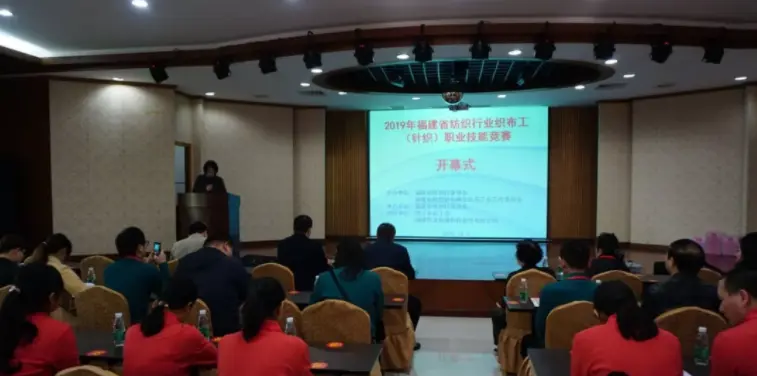
Fujian Changle Tianyang Knitting Co., Ltd. treats skilled production staff as a core part of stable textile manufacturing. In the 2019 Fujian Provincial Textile Industry Weaver (Knitwear) Vocational Skills Competition, company employee Xu Tingting received recognition in the final round. For buyers, this kind of update is relevant because fabric quality depends not only on machines, but also on the operators who control daily production details.
Why operator skill matters in textile production
Warp knitted fabric production is not fully decided by equipment name or factory size. Operators need to understand yarn condition, machine setting, tension changes, yarn joining, incorrect yarn replacement and early defect signals. These details influence fabric consistency long before final roll inspection.
For overseas apparel brands, garment manufacturers and importers, trained operators reduce avoidable risks. A small production mistake may become shade variation, broken texture, unstable width or visible fabric defects if it is not found early.
- Skilled workers can identify yarn and machine problems earlier.
- Daily operating discipline helps approved samples repeat in bulk.
- Training reduces avoidable defects and communication delays.
What the competition tested
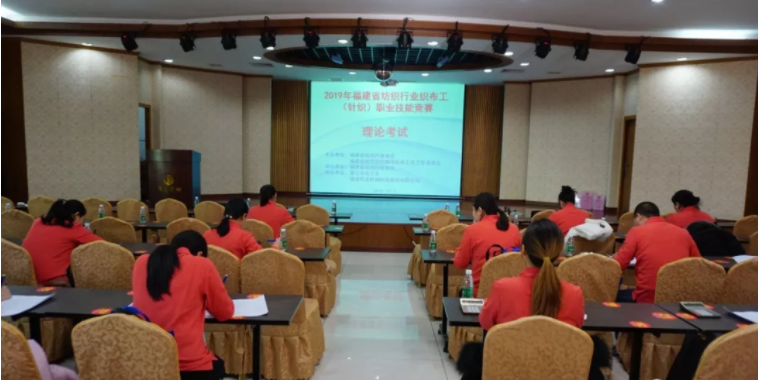
The final was held on December 7, 2019 at Fujian Jilong Machinery Technology Co., Ltd. More than 20 contestants from 10 textile enterprises entered the final stage. The assessment covered both theoretical knowledge and practical operations.
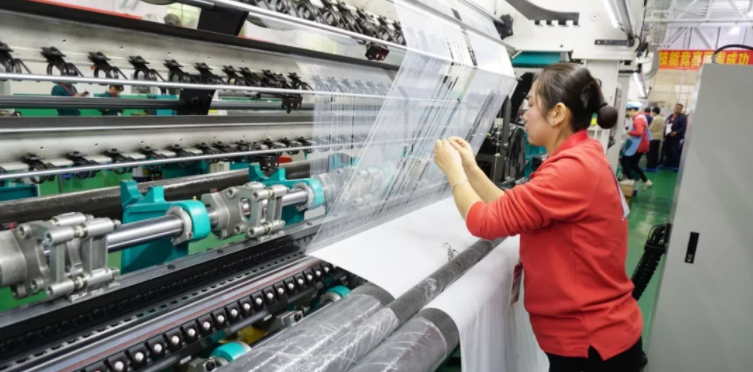
The practical tasks were close to real production work. Yarn joining, wrong-yarn replacement and yarn threading may sound small, but they directly affect production efficiency, roll quality and machine stability.
| Assessment area | Connection with fabric production |
|---|---|
| Theoretical knowledge | Helps operators understand process standards |
| Yarn joining | Reduces visible joins and production interruption |
| Wrong-yarn replacement | Prevents mixed yarn defects in bulk rolls |
| Yarn threading | Supports stable machine operation and fabric structure |
How this connects with buyer confidence
Buyers usually evaluate a supplier through samples, price, delivery and communication. However, worker skill is also part of supplier reliability. A factory with better training can usually respond more clearly when buyers ask about defect control, sampling repeatability and bulk inspection.
Changle Tianyang will continue to strengthen staff training, equipment operation standards and quality awareness across its textile manufacturing workflow. These internal controls support our work in mesh fabrics, apparel fabrics, functional textiles and custom fabric development.
- Ask how samples are transferred into bulk production standards.
- Ask how operators report yarn or machine abnormalities.
- Review whether production and inspection teams use the same approval reference.
How buyers can use this company update
Company news is useful only when it helps a buyer understand factory capability, communication style and production control. For technical comparison, review the product range, factory background and fabric inquiry form together.
FAQ
Why does a skills competition matter to fabric buyers?
It shows the factory values practical operator training. Operator skill affects yarn handling, machine stability, defect prevention and bulk fabric consistency.
Does employee recognition replace fabric testing?
No. It is a trust signal about production discipline, but buyers should still approve samples, test results and bulk roll standards.
What should buyers ask about production control?
Ask how approved samples are kept, how defects are reported, how roll inspection is managed and how operators handle yarn or machine issues.
COMPANY TRUST HUB
Review company background, production capability and inquiry paths
Company updates are most useful when connected with factory capability, product categories and clear next-step communication.