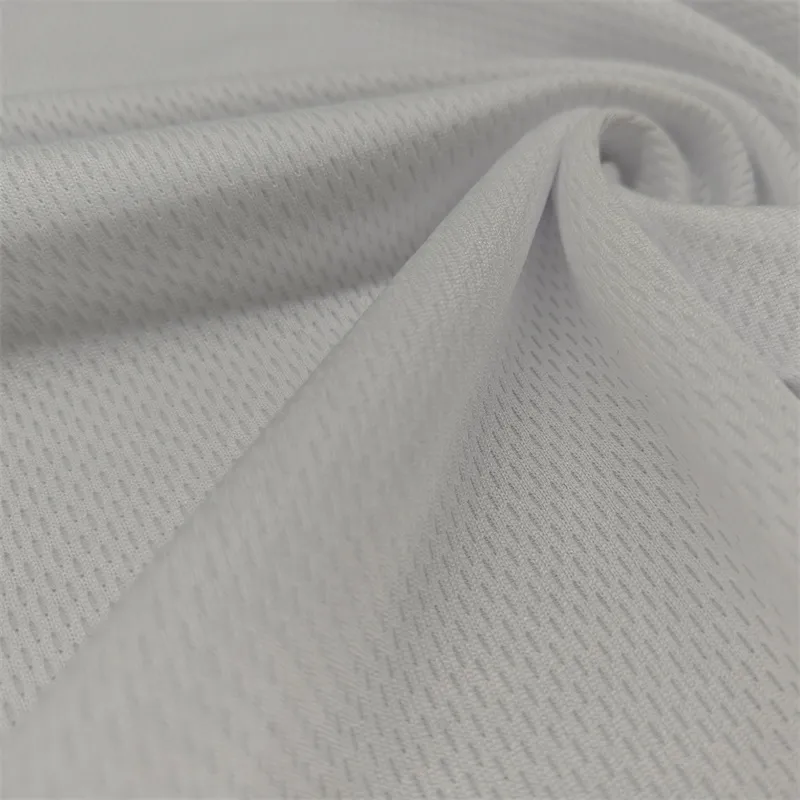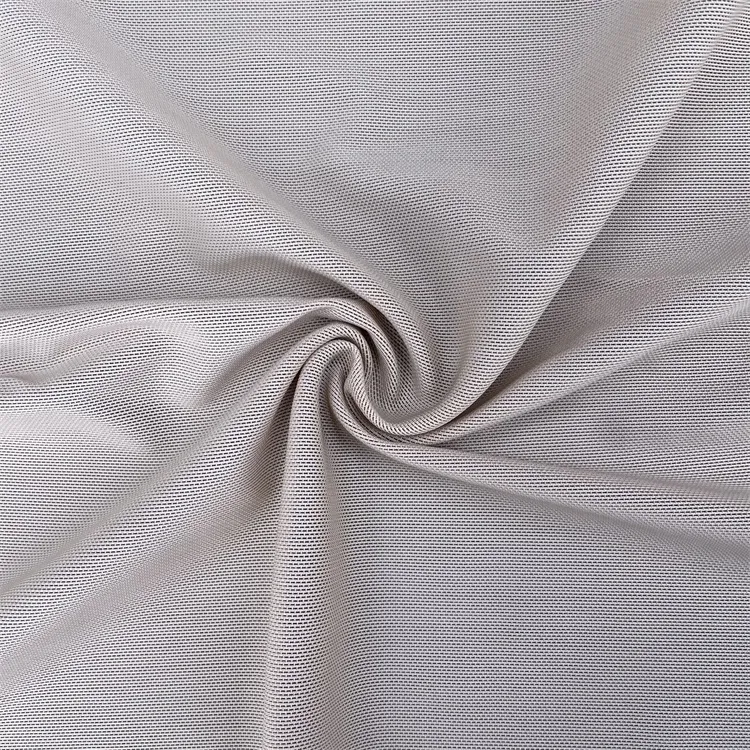
Fiber is only one part of a sportswear mesh specification. Hole pattern, knitting density, finished weight, elastane content and finishing can change how two fabrics feel and perform, even when their fiber names look similar on a quotation.
Use polyester versus nylon as a starting direction, then compare actual samples under the same garment use. A buyer should not approve either option only because one fiber is described as quick-dry, soft, durable or premium.
Start with the sportswear panel role
A full training top, an underarm ventilation insert and a body-close side panel do not ask the mesh to do the same job. The first step is to mark where the fabric sits, how much movement it receives, whether it touches skin and whether it must carry print or a repeat team color.
If the open question is hole size or surface appearance rather than fiber, compare the micro mesh and bird eye mesh structures first. Return to polyester versus nylon after the panel role and mesh construction are reasonably clear.
When should polyester mesh be sampled first?
Start with a polyester mesh sample when the brand already has an approved polyester reference, needs compatibility with a polyester fabric program, or wants to evaluate a specific polyester-based print, color or finishing route. These are development reasons, not proof that every polyester mesh will perform the same way.
The sample still needs to prove the target handfeel, opacity, airflow, seam behavior and stretch response. If drying or liquid transport matters, put the agreed test method and conditioning details in the specification instead of relying on the fiber label.
When should nylon mesh be sampled first?
Start with a nylon mesh sample when the approved reference is nylon, when a body-close panel has a specific touch target, or when the buyer wants to compare a nylon construction in a rubbing zone. The finished sample must still demonstrate the required feel and abrasion result; the fiber name alone does not approve either property.
How should buyers compare polyester and nylon mesh samples?
| Decision factor | What to compare | Approval method | Buyer decision |
|---|---|---|---|
| Handfeel and drape | Skin-side touch, surface smoothness and how the panel hangs | Review finished swatches under the same conditioning and garment position | Approve the sample that matches the signed handfeel reference |
| Airflow | Finished hole structure, density and air-permeability result | Use ISO 9237 or the buyer's agreed method when a numerical target is required | Compare structures under the same test conditions, not by fiber name |
| Liquid transport | Wetting, vertical transport and the required drying behavior | Use an agreed method; AATCC TM197 applies to vertical wicking rate | Keep wicking and drying requirements separate in the specification |
| Abrasion | The actual face exposed to straps, seams or repeated rubbing | Use ISO 12947-2 or the buyer's required abrasion method | Approve against the panel's real exposure and acceptance rule |
| Shade and finish | Lab dip, finish, face side and repeat-lot expectations | Approve a color standard and written bulk tolerance | Do not confirm bulk color from an unapproved sample image |
| Stretch and recovery | Stretch direction, extension, recovery and panel distortion | Compare finished samples with the agreed extension and recovery method | Match the construction to the movement zone before bulk approval |
Have a reference mesh or garment sketch? Send the panel role, target handfeel and required tests through the fabric inquiry form so both fiber directions can be compared against the same use case.
Why can mesh structure matter more than fiber name?
A more open hole pattern may increase visible openness but can also change opacity, edge stability and seam behavior. A denser bird-eye, pin-dot or tricot structure may respond differently even when it uses the same base fiber.
For a useful comparison, keep the two samples as close as practical in panel role, finished weight, width, stretch direction and finish. If every variable changes at once, the buyer cannot tell whether the difference came from polyester, nylon or the construction itself.
Should the sportswear mesh include elastane?
Elastane is a construction decision rather than an automatic requirement. A loose ventilation insert may not need the same recovery as a fitted side panel crossing a high-movement zone.
Specify whether stretch is required in the width, length or both directions, then approve extension and recovery on the finished sample. Polyester and nylon directions can both be evaluated with or without elastane when the selected knit construction supports the project requirement.
Sample approval workflow before bulk production
- Mark the mesh panel on the garment sketch and describe whether it is a body fabric, lining or ventilation insert.
- Send an approved reference swatch, close-up image or existing garment when one is available.
- Compare polyester and nylon samples against the same handfeel, opacity, airflow and stretch brief.
- Approve the lab dip, finish and face side before using the sample as a bulk color reference.
- Record the applicable test method, conditioning and acceptance requirement instead of writing a generic performance label.
- Confirm finished width, estimated volume and written bulk tolerances before final quotation and production approval.
FAQ
Q1. Is polyester mesh always better for sportswear?
No. Polyester may be a suitable starting direction for some programs, but the finished hole structure, weight, stretch, finish and panel role still need sample approval.
Q2. Is nylon mesh always softer than polyester mesh?
No. Fiber can influence the development direction, but yarn, knitting density and finishing also affect touch. Approve handfeel with finished swatches rather than a fiber assumption.
Q3. Does fiber type determine mesh breathability?
Not by itself. Hole structure, density, finished weight and finish affect airflow. When a numerical target matters, compare finished samples with an agreed method such as ISO 9237.
Q4. Can polyester and nylon mesh both include elastane?
Both fiber directions can be evaluated with elastane when the knit construction and garment role require stretch and recovery. Confirm direction and performance on the finished sample.
Q5. What should a buyer send before requesting mesh samples?
Send the garment use, panel role, reference sample, composition direction, weight and width range, stretch direction, handfeel, color, finish, tests and estimated volume.
Test-method references for sample comparison
ISO 9237 describes a method for measuring fabric air permeability. AATCC TM197 evaluates vertical liquid transport to specified distances, while ISO 12947-2 covers Martindale abrasion specimen breakdown.
These standards define specific test procedures; they do not prove that polyester or nylon will always perform better. The buyer and mill should agree on the relevant method, conditions and acceptance rule for the actual sportswear panel.
Send the garment sketch, panel role, reference sample, handfeel target, stretch direction and required tests through the fabric inquiry form. If the structure is still open, review the sportswear mesh sourcing guide before requesting a comparison sample.
Continue your fabric sourcing review
Compare the related category and product examples, then send your target composition, GSM, width, end use, quantity or sample reference for a factory review.